

Why Your Bank Balance Doesn’t Equal Your Profit
(And Why That’s a Good Thing)
As a small‑business owner, you’ve probably had this moment:
You open your banking app, see the number staring back at you, and think…
“Wait. If I made a profit this month, why doesn’t my bank account show it?”
You’re not alone. In fact, this is one of the most common points of confusion for entrepreneurs — and one of the first things we clarify for new clients at Salt & Sand Bookkeeping.
Let’s break it down in a way that actually makes sense.
Bank Balance vs. Profit: Two Very Different Stories
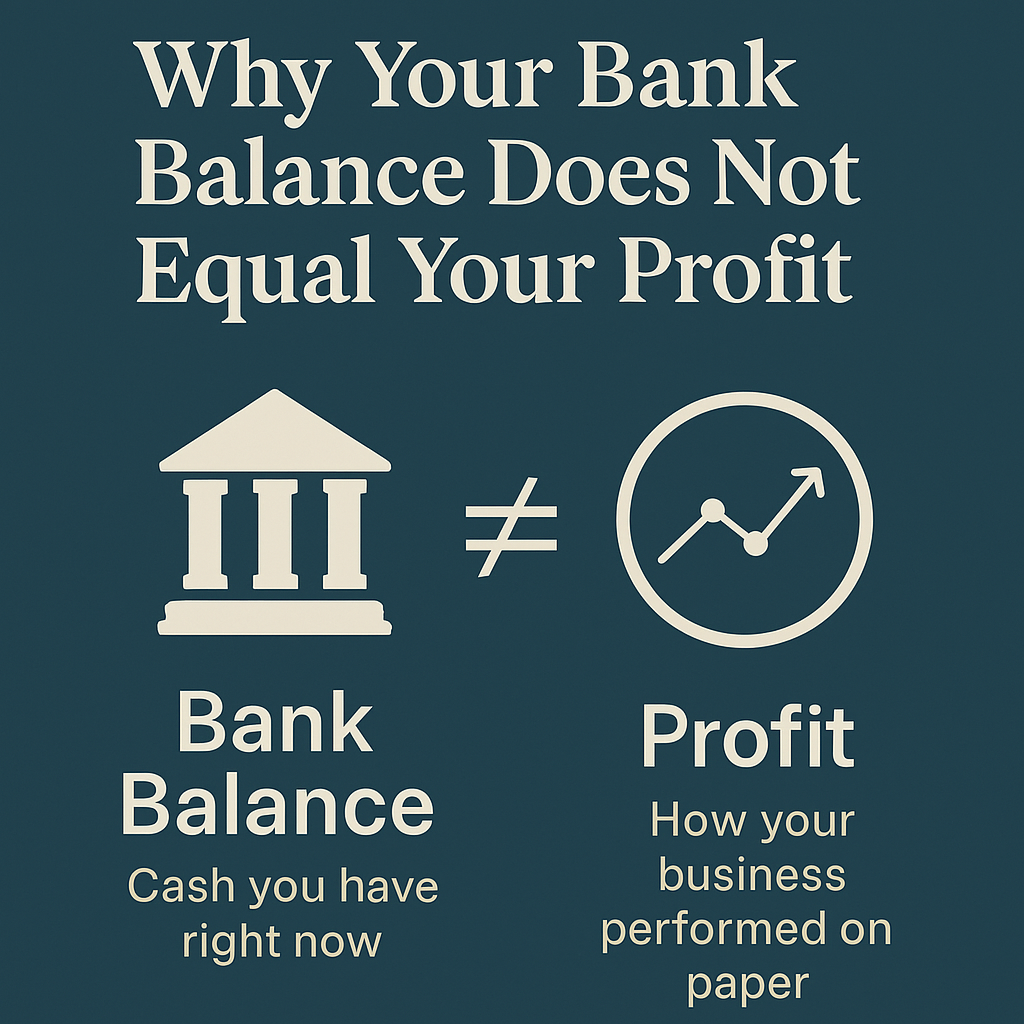
Your bank balance tells you how much cash you have right now.
Your profit tells you how your business performed over a period of time.
They measure completely different things — which is why they rarely match.
🏦 Your Bank Balance: A Snapshot of Cash
Your bank balance reflects:
Money that has actually hit your account
Payments that have actually cleared
Bank fees
Transfers in and out
It does not reflect:
Invoices you’re still waiting to be paid
Bills you’ve already incurred but haven’t paid yet
Pending transactions
It’s a real‑time cash picture — nothing more, nothing less.
📊 Your Profit: A Snapshot of Performance
Your Profit & Loss (P&L) statement shows:
Income you earned (even if you haven’t been paid yet)
Expenses you incurred (even if you haven’t paid them yet)
Profit is about performance, not cash.
You can be profitable on paper while your bank account feels tight — or vice versa.
Why They Don’t Match (The Real Reasons)
1. Timing Differences
This is the biggest culprit.
You recorded revenue, but the client hasn’t paid yet.
You recorded an expense, but the cash hasn’t left the bank yet.
Your books and your bank move on different timelines.
2. Outstanding Invoices
Your P&L says you earned the money.
Your bank says, “Not yet.”
Service‑based businesses feel this the most.
3. Large or Irregular Expenses
Annual software renewals, contractor invoices, equipment purchases — these can drain cash quickly, even if your business is profitable overall.
4. Owner Draws & Loan Payments
This is the one most business owners miss.
Owner draws
Credit card payments
Loan principal payments
These reduce your bank balance, but they do not show up as expenses on your P&L.
So your profit stays the same while your cash drops.
The Bottom Line
Profit measures performance.
Your bank balance measures liquidity.
They’re supposed to be different — and understanding that difference is one of the most empowering steps you can take as a business owner.
At Salt & Sand Bookkeeping, we help you read both numbers clearly so you can make confident, informed decisions without the confusion. Questions about your books?